

When To Sow Wildflower Seeds: A UK Guide
Introducing wildflowers to your outdoor space is a wonderful way to bring colour, variety and interest to your view, not to mention the abundance of wildlife they attract. From bees and butterflies, to birds, hedgehogs and voles, a successful wildflower garden will be a buzzing habitat for nature. Once established, wildflowers need little to no gardening or extras as they thrive in poor soil, making them an attractive, low maintenance option for large spaces and busy lives.
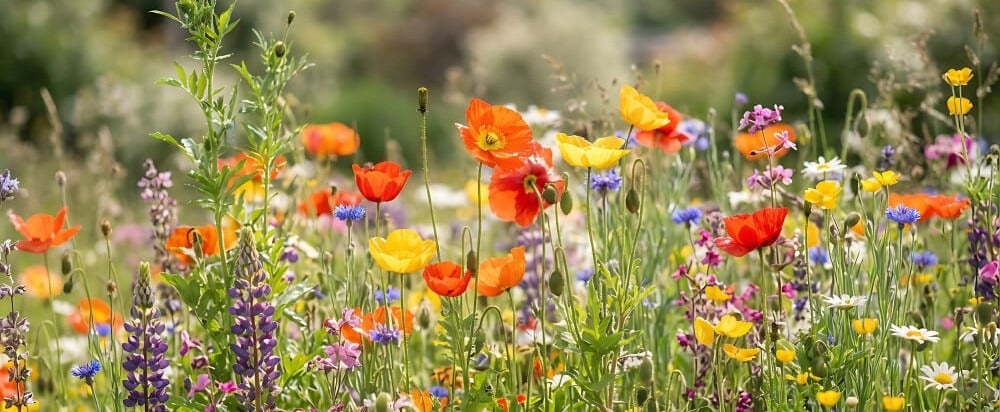
Wildflowers have two main sowing windows; Autumn (September-October) and Spring (March – April), however Autumn sowing gives the highest germination rates at 70-90% according to Garden UK
In this guide we will take you through everything you need to establish your wildflower garden from tools to technique. We’ll also take a look at some of the wildflower seed mixes available and how to choose the best mix for your growing conditions.
What are wildflowers?
It’s helpful, before growing them, to understanding exactly what we mean when we talk about wildflowers. Wildflowers are native flowering plants that grow naturally in a particular area without being planted or maintained by people. In the UK, wildflowers include varieties such as poppies, oxeye daisies and cornflowers.
Where to start with your wildflower garden
Wildflower seed mix is easy to sow in spring and autumn. The secret to a successful wildflower meadow is density, you want to make sure you have plenty of seed for your area. Most seed packets will give you a guide as to the area of size the seeds will cover in grams of seed needed per square metre eg 2g/m². Our range of wildflower seed mix offers a variety of pack sizes from 10g for small wildflower patches to our 1kg bags that have a coverage of 2000m².
How to calculate how much wildflower seed you will need
First, you will need to measure the area you want to plant and work out the total square metres. You can do this by multiplying the length × width.
When you’ve found your wildflower seed mix, check the recommended sowing rate. For example, if it says 2g/m², multiply 2g by the total area.
For example:
A 10m² area × 2g/m² = 20g of seed needed.
Tools you will need to plant a wildflower garden
- Seed mix
- Garden fork
- Rake
- Dry sand
- Hose or watering can
- Garden canes or Gardening twine and pegs
- Garden hose or watering can
- Bird-proof netting
- Bird scarer, eg Silver Milk bottle tops, line of CDs, or wind chimes (optional)
How to sow your wildflower garden
Step 1. Prepare
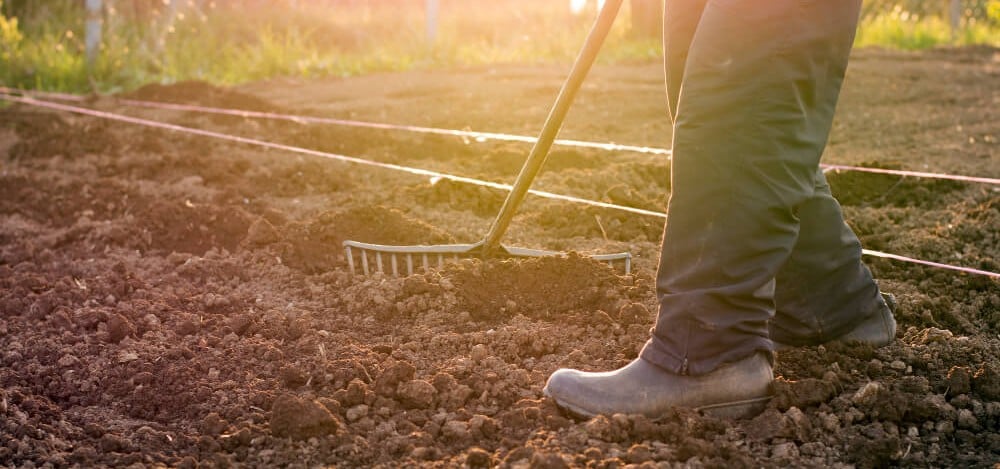
Start by cultivating the area. Use a garden fork to loosen the soil, breaking down clods and removing any weeds or large stones. Finish by raking the soil to create a level, even surface.
Mark out your area. Although wildflowers are best sown free form rather than in straight lines it can be helpful to grid out the area into square metres using garden canes or garden twine. This way you know how exactly how much seed you’ve used in one area and reduces the risk of running out or having a patchy garden.
Next prepare your wildflower seed mix. We recommend mixing your seed with a couple of handfuls of dry sand. This step has couple of benefits. First of all, it makes them easier to scatter as it adds a bit of weight bulk to the seed, it also makes the seed easier to spot on the ground.
Step 2. Sow your wildflower seed
For an even coverage, we recommend using the following method. Divide your seed and sand mix into two batches. The first batch using a wrist flicking, up and down motion. Repeat the process with the second batch but moving side to side.
Firm down the seed. Using the back of your rake or the back of a spade press the seed into the soil to give them the best chance of germination. However, make sure not to cover the seed.
If there is no rain forecast for the next few days you can lightly water your seed with a fine spray.
Step 3. Protecting your seed from birds
This is one of the most important steps when sowing a wildflower garden. Leave your seed unprotected and you may as well have put out a little buffet for the birds! You can protect your seed in a number of ways, either by covering with fleeced or fine netting, or we with a makeshift bird scarer. You can easily make a DIY bird scarer by threading old CDS, silver milk bottle tops or strips of tin foil to the line and stretching it across the area. The birds don’t like the sound or light reflection and with a bit of luck should keep hungry visitors at bay.
Once your seeds have germinated and sprouts have appeared you can remove these defences.
Step 4. Enjoy your wildflowers
You should start to see shoots appear after a couple of weeks. Water seedling once a week if the weather is dry.
For a natural look one or two weeds are fine in a wildflower garden, many weeds are in fact just wildflowers, however you want to make sure to remove any vigorous variations from your wildflower garden such as nettles, dock and dandelions that could overwhelm your seedlings.
Once your wildflower garden has flowered and gone to seed, you can either collect any seeds that drop and start another wildflower patch or just let the self-sow where they land for more new flowers the following season.
Choosing your wildflower seed mix
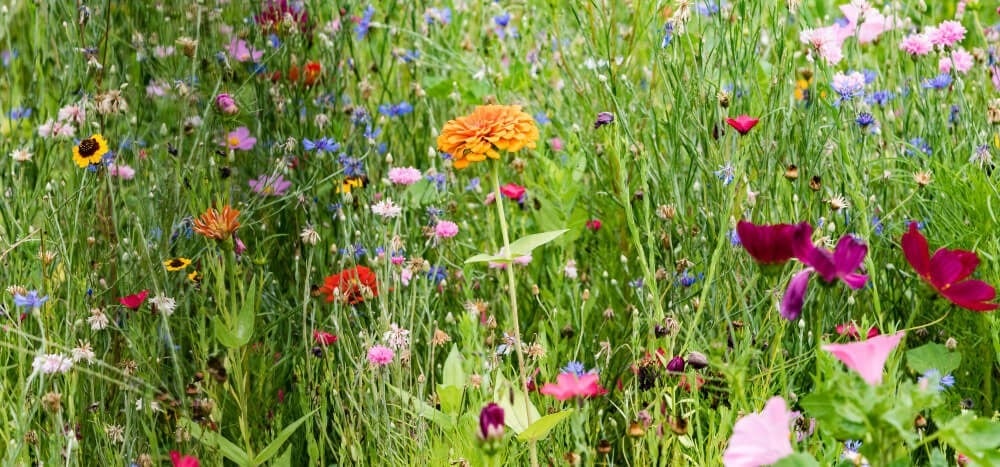
For a successful wildflower garden, you want to make sure you are doing one thing: picking the right seed mix for your soil conditions from a trusted brand. With more than 40 years of experience, John Chambers has built a strong reputation for native wildflower seed and meadow planting across the UK. Their range includes mixes for everything from traditional meadows and woodland areas to green roofs and more challenging sites. For a wildflower patch to work, you need to pick seeds that would naturally thrive in that soil. Think about how much sunlight it gets, whether the soil is dry or damp, and how you want the finished area to look.
Cornfield Annual Mix
If you want plenty of colour in the first year, a Cornfield Annual mix is a great option. With traditional cornfield flowers such as poppies, cornflowers, corncockle and corn chamomile, it creates a bright, colourful display through the summer.
Dual Purpose Wildflower Mix
This Dual Purpose mix combines annual and perennial species, giving you colour in the first year while perennial plants establish for future seasons. It’s a versatile choice for general landscaping when you’re covering a large area and great for wildlife.
Shade Mix
For areas where sunlight is limited, choose a mix designed for shade like the John Chambers Woodland Shade Mix. With perennial species such as foxglove, bluebell and oxeye daisy, it’s well suited to woodland edges, beneath trees and alongside hedgerows and has a wonderful fairytale feel to it.
Sand & Dry Soils Mix
Dry, sandy or free-draining ground can be challenging, so this mix contains species better suited to lower moisture levels. It’s a useful choice for banks, sandy soils and areas that dry out quickly.
Pond & Water Edge Mix
For damp ground, a pond and water specialist mix is the way to go. This mix contains moisture-tolerant species such as Meadowsweet, Teasel, Yellow Flag Iris, and Gypsywort all known to thrive in a wet landscape.
Green Roof Mix
Designed for exposed, shallow growing conditions, the specialist Green Roof Mix is ideal if you’re trying to achieve a green roof on outbuildings or bin storage. This mix thrives in challenging conditions, delivering a resilient and colourful display that supports pollinators and biodiversity.
Can I sow wildflowers directly onto a lawn?
Although wildflowers are very low maintenance, we do not recommend simply scattering seeds onto your existing lawn. Not only is it difficult for the seeds to find space to germinate, but any seedlings that do establish will be competing with the existing grass for light, water and nutrients.
If you’re envisioning a lawn studded with wildflowers, we would recommend using a Flowering Lawn Wildflower Seed Mix. This low-growing mix is designed to tolerate light foot traffic while adding subtle seasonal colour and creating a more wildlife-friendly lawn.
Create your perfect wildflower garden
Remember it’s not just about when to sow wildflowers in the UK but also where to sow them and which seeds to sow where. From sunny, open ground to shady areas, dry soils and damp spaces, there’s a wildflower seed mix to suit almost every part of the landscape.
Take a little time to prepare the ground, choose a mix suited to your site and give the seeds the best possible start. Get those basics right and you’ll be well on your way to creating a colourful, wildlife-friendly space that looks great and keeps coming back year after year.


